Monday, May 30, 2011

The Steakhouse Dinner


My blog page was intended for the use of posting information relating to my first novel Benson's House. I was hoping it would become a vehicle for discussions and a companion to the novel, allowing descriptions of the era's, topics, themes, and subplots of the story.

However, finding the time to write new articles has been preoccupied by the necessities of polishing the novel for publication, and rewriting letters to promote the book. I'm finding less time to commit to developing new material or contributions to the blog.

Still, I need to write. I'm compelled by this unknown desire. So, I submit the following short unrelated to Benson's House, and hope you enjoy.


The Steakhouse Dinner

He watches with discontent as she applies her lip gloss to the measure of the restaurant chatter and the soulful phrasing of Sam Moore's- I Can't Stop the Rain- piping in from the ceiling speakers. Her eccentric application is enough to prompt him to dismiss the date; to return home to the half consumed sandwich, wedged- for the last two days- between a half filled carton of Corona and a plastic wrapped case of water bottles on the bottom shelve of his garage refrigerator. However, he decides, instead, to endure her antics and not allow her self indulgences to prevent him from enjoying his favorite steakhouse- chosen selfishly- as his reward for the months of Friday night dates, escorting her to pricey dining locales, where she hoped to be discovered as the next national broadcasting treasure.

She closes her compact mirror and places it the depths of her knockoff Lois Vuitton, Cabas, Ambre, handbag, just as the food arrives.

"I don't see what attracts you to dumps like these? There's not a soul in this place that can offer anything to advance our careers."

"Perhaps not, but they singe a wicked Rib-eye," he offers while winking at the waitress. "Anyway, I'm quite happy with what I do."

"Best steaks for the price in town, ma'am, can I get ya'll anything else?

"I don't suppose you'd have a Valium or a stomach pump handy?"

"No ma'am."

"Then just bring me another Mojito," she says dismissively.

"I'll have another beer."

"I don't believe for one minute you're really content with producing the local news. We could've dined with the Hendrickson's at Roy's tonight, John. He's often spoke of meeting with you to consider your advancement into the larger markets. That's how things are done in this industry- over dinner in swank restaurants in a more relaxed atmosphere. I would have ordered the seared Barramundi, instead of this slab of animal flesh. My God,will you look at the portion of meat they've served me? I can't eat all this."

Already indulging in a bite of his season rubbed, entrée, John focuses on the taste as a distraction to the protesting coming from the other side of the table. He chews, silently, savoring the flavors, watching as she grips the utensils and slices the bacon wrapped fillet upon her plate.

"Oh this thing is way undercooked," she objects while tossing her knife and fork onto the table. "This hunk of meat has E. coli written all over it."

He swallows before speaking.

"Katherine, taste it. It's suppose to be pink inside. I've had it before. It will melt in your mouth."

"Let it melt in someone else's mouth. If I ate that I'd be in the bathroom all evening, and I have better things to do tonight. We should of gone to Roy's."

He carves off another piece of steak, and begins chewing with aggravated fervor.

"My God, John, I'm an anchor, and a regularly watched person in this community. What were you thinking, bringing me to a diner full of yokels, to fattening me up with large slabs of undercooked cattle?"

"Beef is not fattening."

"Really, John, speak with you mouth full. It's such a turn on. I'm incredibly attracted to you at this moment."

He pauses, motionless, with a grimacing expression.

"What's wrong?"

"I bit my tongue."

"Here we are," the waitress said returning with the beverages.

John swallows, then places his napkin on the inside of his mouth.

"What's wrong?"

He bit his tongue."

"Oh my," the waitress said placing the drinks in their appropriate spots.

John pulls the napkin away to reveal a circular, rose colored, blotch on its folded corner.

"Nice. Now your tongue will probably swell to the size of a baseball with all the bacteria contaminating your steak."

"Is there somethin' wrong with his steak, ma'am?"

"It's fine. I'll be okay."

Katerine fans her hand, dismissively.

"You can take this away."

"Aren't ya gonna eat you meal ma'am?"

"No."

"Do you want me to bring a box?"

"Yes," John interjects, "Bring boxes for each; we're leaving."

"Yes sir."

Katherine crosses her arms and raises her left hand to support her chin.

"What?" She finally asks.

"Does any of this have to do with the comment I made to the lady at the retirement home luncheon this afternoon?"

"Oh that. I've forgotten about that, but now that you bring it up, yes. You told that innocent, little, old, lady that Palin was not news worthy, after she asked you to allot the candidate more air time."

"Palin hasn't officially announced that she is running."

"Whatever. That's just another example of what everyone's been trying to instill in your stubborn mind, now, for the last year or so. Our viewers like Palin, and don't care about the issues. They want to be entertained. It's what television does; it entertains."

"And informs. We have a responsibility to the segment of viewers who want to be informed, don't we? How are they to decide on an elected official if we don't report the issues?"

"What are you talking about? People vote because they have a right to. You can't tell them how to vote."

"I'm not suggesting that. I'm simply pointing out that they need information to make informed decisions. Our network has a responsibility to provide that."

"Trust me, our viewers don't care to be informed that way. They want to learn about events going on in the community, the weather,and that's it. And, they want an attractive woman- who doesn't stutter- to present it to them. That's why I was hired."

"Here's your boxes."

"Listen, dear, see if you can't get the cook to fire this up a little longer, would you please."

"That mean you're staying?"

"Let's see if this man can finish his meal without chumping on parts of his tongue, shall we.

"Yes, ma'am.

"Would you bring me a glass of Jack Daniels?"

"You just want a full glass of bourbon?"

Katherine smiles.

"Just bring him a double on the rocks for now, and another Mojito for me."

"You know, you're such a hypocrite," Katherine continues as the waitress moves away. "You talk about the need to feed the public intellect, and, yet, you date me- not because I'm intellectual- but because I'm hot, and you like the attention that's drawn to us."

"I don't see it like that."

"Bullshit."

"You know, sometimes you can be as phony as your handbag. I know you don't mean all that you're saying.You've told me, often, that you feel the world is becoming a cesspool of uneducated, tattooed plasma; consuming to fill the intellectual void in their lives."

"And you think our little news network can change all that? If we attempt to change our viewer's habits our audience will tune out. Our ratings will then drop, and you and I, my dear, will be looking for something else to do. You can't go back to your editorial post at the Times- they're falling apart. Just where do you think you'll land? I don't think Fox will have you"

"Here's your steak ma'am."

"Oh goody!"

Katherine cuts off a small portion.

"How is it?"

Um; just yummy," she says sarcastically.

"Oh, well, I'll go get your drinks now."

Actually, John, this is damn good," Katherine admits when the waitress was out of earshot.

"Something's gonna change; it's bound to. Society can't continue on this intellectual slide."

Katherine was not listening. She was preoccupied by her dinner.

Soon the waitress returns with their drinks.

"Somethin' I've been meaning to ask you all night, ma'am. Aren't you the lady on the local news channel?"

Katherine pauses to swollow.

"Yes, but do keep it to yourself, shall we? I don't often have time to relax outside of the limelight."

"I understand."

"Tell me," John askes, " how often do you watch the local news?"

"I don't, to be honest. They really don't have much to say, 'cept what's goin' on with the local teams, or maybe the weather."

"I see. So, where do you get your news from?"

"Oh, the internet, mostly- Huffington Post- that sort of thing."

John's smile spurs Katherine to interject.

"Tell me what do you think is the most provocative story out there?"

"Oh I reckon it's this Casey Anderson trail."

"Uh huh, and do you think she did it?"

"I don't know. She probably did, but I don't think they've got enough evidence pinned to her. She'll probably walk, and make millions on her life story, or end up on Dancing with the Stars or somethin'. I swear, that's just how things are, now, in America. People are just so damn stupid, and I blame the stuff on television. I remember my daddy made the family watch Cronkite every evening at 7:30, right after dinner, before any of the prime time shows came on. We'd then talk about the issues during the commercials over the remainder of the night. Nowadays, the evening news is on during the dinner hour, so folks can watch Wheel of Fortune. No ones listening to what's gonin' on in the world anymore. Seems a shame. Can I get ya'll anythin' else while I'm here."

John smiles.

"No, darlin'; comeback a little later.

He then returns his attention to his meal.

"I'm surprised, Katherine states. "I would have thought the pain from the last experience would have prevented you from biting you tongue again."

John chuckles and motions with his fork.

"I think she spoke to the issue well enough without the need of further commenting. Go on an finish what little bit is left of your steak."

Sunday, February 27, 2011

Brand On The Run

When the moments arise when I become frustrated by the ineptitude of the submission process, I'm reminded of early advisement given by someone whose words hold true. I was persuaded early on to have faith in the industry, and was assured that by understanding the distinction between a writing coach and a literary parvenu, I would avoid self rejection, and maintain the confidence to construct a successful project.

The goal of my initial objective was to complete the first draft, then seek someone to guide me through the process,and assist me in improving my work. I thought an agent would appear to coddle me with encouraging accolades, and correct my project's imperfections with experienced advise. I know Benson's House is appealing; I've watched my words provoke emotions from those reading it's text. The gratification of striking that cord is like what an entertainer feels when in sync with the audience: the sensation is overwhelming, and I strive to enhance the power of that connection.

Many talented people have been willing to help me on this quest, but often I find there are incompetent braggarts circulating that dictate phony advise, and claim to be the oracles of knowledge on the traits necessary to brand a financially successful project. It is important to recognize the difference between those sharing practical experiences and those selling snake oil. The ones providing constructive criticism are genuine and have favorably contributed to my ambition of authoring- as one of my colleagues described it- the best historical fiction of '12. I am not boasting, but merely setting the bar.

And, I personally find it difficult to avoid the ones offering false promises: I'm too gullible. I'm often tempted to enter the tent of the charlatans: those offering "how to" advise for a nominal fee. I find myself like that of a boy, standing before the sideshow barker, pondering if I should pay the 50 cents to see the bearded lady. I'm intrigued and ponder if the person behind the tarp has the same facial hair length concealing the sultry form of the woman appearing in the illustration on the banner outside the tent.

Fortunately I become bothered by the barker's dares to see, first hand, whether or not the illusion is real or fake. I become convinced that the odds are in favor of his persuasion being false, and although I'm a natural born optimist, the consultant's words of having faith in the industry speak to me, and I preserve my four bits for a more sensible purchase.

I was once tempted, by the promotion of a former literary agent assistant, who promised to reveal the secret to alluring an agent into receiving a query letter. The mystery surrounding the submission process was to be revealed in the purchase of her book. Then the consultants voice spoke, again, and I questioned with remorse how it was possible for a literary agent's assistant to council creative writers how to compose a compassionate letter.

I once received a submission reply informing me the agent would not be a suitable representative, because my project was in the genre of historical fiction, and she did not do well in high school history. I never responded; I felt her remark was somewhat like confessing the inability to determine if Rachmaninoff was a gifted musician, because of a failure to do well studying piano.

Blockbuster's filing for Chapter 11 is because of a lack of genuine product, not because of a lack of viewers. Boarders Group nears bankruptcy because of a lack of genuine product, not because of a lack of readers. And, yet, projects rot in slush piles like compost in the city dump. But, the words return: "Have faith in the industry!" I do, and so far the process has structured improvements to the content of the novel.

No one prefers weak tea sipped before it has sufficient time to brew. There are no dull literary works only unpolished projects, and I'm confident the consultant's words are correct. The industry will- in synergy- provide me with the resources to shape my work with perfection. I've formulated the necessary rewrites to submit Benson's House. I've constructed a marketing plan and I'm ready to receive advise in orchestrating the stages to launch the novel's public premiere.

The boy will preserve his 50 cents until the novel's release, when he will celebrate by exchanging his coins for a swirl of cotton candy wrapped around a paper cone. The confectionery sweetness will be savored, and will be appreciated, at a future moment in time.

If I ever get out of here,
Thought of giving it all away,
To a registered charity,
All I need is a pint a day-
If I ever get out of here.


Paul McCartney

Wednesday, January 5, 2011

1913 International Exhibit of Modern Art


In this excerpt from Benson's House, Elizabeth- the prodigal granddaughter of Justin and Sarah Benson- returns to New York to debut her art exhibit- Postcards from the Western World- at the newly constructed Taggart Benson Museum. Elizabeth was nine when she began her formal studies of art with Cecelia Beaux at the Pennsylvania Academy of Fine Art. She stayed with Cecelia until enrolling in Goldsmiths College, London, England, at the age of sixteen. Elizabeth was now twenty- five and had been abroad for nine years. At the time, Cecelia had gained a renowned reputation as being one of the most talented traditionalist portrait artist of the era.However, she found the direction of contemporary art undisciplined, and denounced many of its current contributions.

Danielle Watson was Elizabeth's lifelong best friend, and the current President of Chariot Records. They were staying at Elizabeth's mother's home on MacDougal Street, a few streets away from Benson's House. The reunion of the Post Impressionist painter, and the head of a thriving recording company, marked the beginning of a revolution of sight and sound that was about to create a new era of contemporary pop culture .

Elizabeth put her nightgown on as she carefully listened for an indication her mother had retired for the night. When she heard her mother’s bedroom door close, she quietly exited her room and crept over to her brother’s former bedroom where Danielle was spending the night. She cautiously entered to find Danielle in her nightgown, sitting on the bed with her back against the headboard, and her knees pulled towards her chin.

“I attended The Armory Show in 1913. Danielle confessed softly.

"What!” Elizabeth cried with whispered enthusiasm as she sat on the side of the bed.

Danielle nodded her head swiftly.

“I’ve wanted to tell you all night; I went with Cecelia.”

“She never told me that.” Elizabeth stated. “I know she considers the moderns popularity a passing fad, and didn’t have much to say favorably regarding the exhibit.”

“She hated it.” Danielle claimed. “She said the works lacked traditional disciplines and said something about the subject matter being as defiling as those depicted by the Ashcan Boy’s?”

Elizabeth placed her hands over her mouth to muffle her laughter.

“I knew members of The Ashcan Society in Philadelphia. Robert Henri once told me that his style and subject matter- both of which Cecelia refers to as corruptive- was inspired by my grandmother. He told me The Eight, as he described them, were influenced by Melrose’s 1887 exhibit at The Taggart Benson Gallery. They aligned with the acceptance of realism Melrose had adapted from his former associate: Sir John Everett Millair. Henri believes the goal of both members of The Ashcan School, and of Urban Romanticism, are attempts to illustrate realist aesthetics in urban settings. He’s right, and while I learned discipline from Cecelia Beaux, Henri made me recognize the skills I had instinctively adopted from my grandmother- speed and composition.


The exhibit referred to was the International Exhibition of Modern Art, which was held in New York City's 69th Regiment Armory, on Lexington Avenue.For many New Yorkers it was their first glimpse of the progressive art movements that had become the rage of Europe.

Here in America, Traditionalists were shocked by the new expressions of Avant-Garde,Cubism, and Fauvist, and rejected the movements with the same convictions as Cecelia Beaux. The newly conceived expressions were considered short lived mockeries of art disciplines. However, The Metropoloitan Museum of Art's purchase of Paul Cézanne's displayed landscape,View of the Domaine Saint-Joseph, at the exhibit,was regarded by the public as the museum's acceptance of Post- Impressionism, and a signal of the art world's accepted integration of modernism. Progressive cultural ideology was entering the American Psyche.

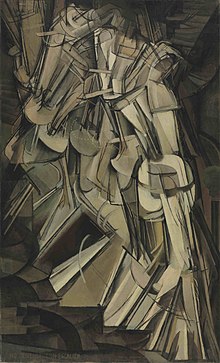
The Armory show displayed standards of art that challenged the times. Realism was shown with distorted departure by the Painterliness expressions of Fauvisms with contributions by artists such as Henri Matisse and Maurice Denis. The influences of Avant- Garde pushed new levels of early Modernism, with displays reflecting the advance stages of Cubist expressions by Pablo Picasso and Marcel Duchamp.This freedom of expression soon entered the era of Dadaism, which declared all objects as art, and formed the foundation of Surrealism and the beginning of our current pop culture.

It was an era of new developments and expressions unlimited by conventional standards.The social introduction of Edison's inventions also created a new medium of sight and sound. Both music and art formulated with limitless adaptation. Jazz cultivated without boundaries; imagery without perimeters.Pop culture began to span its wings in the nest of a new tomorrow.

I often stress the necessity of this thinking in our current cultural climate. Unproven concepts are often ignored, with a false conviction that proven strategies determine the criteria of mass appeal. The story of Benson's House is enacted in a history of pop culture proving conventional wisdom cannot determine the will of the people's taste. Perhaps it is time for a Dada renaissance, striping the shackles of conformity, and allowing for experimentation to give way to new expressions. Unconventional thinking breeds new ideas. It's what caused Surrealism in art; Jazz in music. It's what led to Jackson Pollock and Elvis Presley; Andy Warhol and The Beatles.

The limits of this post, however, prevents me from an extensive examination of The Armory influence, but I encourage all to take a moment some evening and research the show on the internet. View the paintings,study the artists, understand the genius that was unleashed with meaningless free expression.

KARAWANE
Wir können nicht wie die Hunnen auf einen Fanggrund gehen, ihn vernichten und dann einfach mit der Karawane zum nächsten weiterziehen, ohne uns um das Hinterlassene zu kümmern.

Hugo Ball

Friday, December 31, 2010

Reflections in an Empty House


The house is temporarily free of revelers whose annual holiday intrusions are insistently spent in an inebriated state of mind. Needless to say not much writing has been completed over the last two weeks. Officially the year end festivities will cease this evening, but I'm longing to resume writing and find the tranquility of a currently quiet home inspiring. The solitude is shared only by Clio, the proclaiming Muse, whose scroll dictates the order of my post.

Before continuing with the promised reflection on The 1913 Armory Show, I wanted to share an observation my daughter made over dinner during the holidays. We were dining at our favorite Tampa, Fl, locale: Ceviche. The smells of fresh baked bread, and roasted pork, wharfed the air in an atmosphere like that of a rustic church. Plates of many Spanish tapas were spread across our table: oxtail braised in red wine; roasted peppers stuffed with veil and sausage, topped with a light sherry sauce; and, of course, a plentiful serving of Ceviche De La Casa. My attentions were devoted to sampling the dishes, and sipping glasses of white Sangria, constantly freshened by the ceramic pitcher attended to by a ever observant waiter, when my daughter spoke.

She began a torrent of blaming the nation's current financial woes on college graduate programs offered during the late '70's and early '80's. She insisted the curriculum of the day were too respondent to theoretical teachings and to a concerted ideal that was formulated among many of the leading business schools.

Graduates had come away with a conveniently assessed persuasion that all businesses are entities incapable of conceiving morality. Therefore, a profit organization is only responsible to profitability without consideration of consequence. The new order of these "captains of industry" were then obligated to abide to this creed. My daughter was convinced this illogical thinking had seeped into the psyche of America, and was transparent in the concepts of most corporate ceo's and most political leaders.

When she noticed that I was more responsive to the diner and drink, she stared at me intently before shouting-

"Dad! Their reasoning is psychopathic. Our modern society is being manipulated by teachings that have given rise to sociopath leaders."

The statement caused both me and the waiter- who stood holding the pitcher of wine beside where I sat- a moment to pause and reflect. I then noticed my daughter reaching for her purse. When she pulled out a folded sheet of paper, which she began to unfurl with avid authority, I suspected my dining was to be placed on hold for a while, and decided it was probably a good idea to have the waiter prepare another pitcher of Sangria. I was about to approach him, but his glance indicated my order went without saying, and returned several minutes later to prepare the wine.

She began to read descriptions of the behavior of sociopaths, pausing ever so often to raise her eyebrows, and widen her eyes, as an indication to note the defense of her surmise. When she read that sociopaths never recognize the rights of others, and see their self-serving behaviors as permissible, she again turn her assured expression on me.

"Sound like any of your old Wall Street cronies, dad?"

Actually I could have named a few, but merely suggested she continue.

She then read how sociopaths were pathological liars, with an ability to create complexities about their own powers and abilities.

"Sounds like the spinnings of political pundits, or the false allures of commercial advertising to me, doesn't it?" She offered with another stare.

They lack remorse, and see others around them as targets and opportunities. Instead of friends, they have victims and accomplices who end up as victims. They have no concern with wrecking others' lives and dreams, and are oblivious to the devastation they cause. They will not accept blame on themselves, but blames others, even for acts they obviously committed.

When she was through she folded the piece of paper and returned it to her purse.

"Today, these attributions are admired by many in competitive vocations, and are consider traits of leadership. It is the root cause of why many industries are failing."

She then clutched her glass of wine.

"Social Darwinism has failed our Republic." She concluded before taking a sip.

I took this as a sign to return to engaging my fork and knife, which I delightfully procured.

"You are not at all alarmed by my observation." She asked.

"No," I responded, "it will change."

She peered across the table, distraughtly, as I continued cutting my food into eatable portions.

"It will turn," I offered, "it always does. This sort of appeal to avarice behavior was evident at the turn of the century; it ended with the great depression. We managed to turn things around, then, and created a sustainable economy that lasted nearly sixty years. America will gain its moral compass. It will come again."

"How?" She asked.

I paused, with fork and knife still firmly gripped in the clutch of each hand.

"Well, your young and ambitious, and you've observed this national character flaw. Do you honestly think you're alone with your observation? It may correct with the guidance of your generation, perhaps. Still, it will change. In the long run people become bored with immorality and self-serving acts."

She smiled.

"Finish you dinner, dad!

I need to begin preparing for the last evening of a ever disappointing decade, and anxiously anticipate the last dance of 2010. My resolution for the new year is to work with the people, to treat the insanity that is slowly eroding the wealth of the middle class, and discouraging the dreams and efforts of some many aspiring working class heroes.

Let's mark the new year as the moment in time to begin this goal!

Scrooge was better than his word. He did it all, and infinitely more; and to Tiny Tim, who did not die, he was a second father. He became as good a friend, as good a master, and as good a man, as the good old city knew, or any other good old city, town, or borough, in the good old world. Some people laughed to see the alteration in him, but he let them laugh, and little heeded them; for he was wise enough to know that nothing ever happened on this globe, for good, at which some people did not have their fill of laughter in the outset; and knowing that such as these would be blind anyway, he thought it quite as well that they should wrinkle up their eyes in grins, as have the malady in less attractive forms. His own heart laughed: and that was quite enough for him.

He had no further intercourse with Spirits, but lived upon the Total Abstinence Principle, ever afterwards; and it was always said of him, that he knew how to keep Christmas well, if any man alive possessed the knowledge. May that be truly said of us, and all of us! And so, as Tiny Tim observed, God Bless Us, Every One!


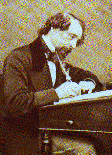
Charles Dickens

Saturday, December 4, 2010

A Writer's Christmas Wish-list

I thought I'd better start composing my Santa wish-list of things I want this year. If Santa complies, here are some of the headlines that will be revealed in the new decade!

IRS regulations allow 401(K)contributions to be made in art and literature.
The S&P 500 plummets as investors liquidate and transfer funds, from Wall Street investments, into the more profitable commodities of art and literature. The paradigm shift- initially spurred by transaction fees dropping to less than 5%- takes hold when consistent long term annual yields of 12% are recognized in contemporary art purchases.
Investors, eager to find alternatives to the financial markets, have also begun investing in the long term appreciation of books. A new breed of literary annalists has replaced the conventional wisdom of stock advisers, and the investment choice is creating a American cultural renaissance.
Publishing houses have begun packaging books with usb data sticks that contain the text in e-reader formats,allowing investors to preserve the hardback copies in home libraries. Home libraries and art galleries have become as trendy as home wine cellars: each storing content that will potentially appreciate in value with age.

Corp bookstore chain coops with nation's public libraries
An amalgamated facility of resource and enlightenment has become a popular weekly evening destination for middle class families. As television viewing continues to abate, places like The Book Store and More chain has risen in popularity.The existence of this conglomerate of both public and private funding is shaping as a prototype of future endeavors.Each night visitors find an array of fascinating family activity, from production extravaganzas surrounding book readings for preschoolers, to media enhanced lectures on literary eras and personalities.
Strolling the aisles one finds senior citizens participating in reading groups and high schools students working collectively on school projects. Research advisers stand in information booths directing visitors to the activities surrounding any given subject on any given night. An appreciation of the sensations afforded by reading has brought the people together in community spirit. Books can either be purchased or borrowed from the library. The chain has experienced a 50% annualized growth rate and is expected to begin opening stores internationally next year.

Macy's literary and art section a hit with retailers.
Clothing brands and accessories associated with the current resurgence of art appreciation are adding to Macy's bottom line. Shoppers can find an array of eclectic buys, from purses styled in patterns inspired by artists such as Pollack and Monet, to white summer suits created by the author Tom Wolfe. For the more discretionary purchaser- nostalgic for the days of un generation perdue in late 20's Paris- evening wear and accessories can be found from the Zelda Fitzgerald Collection.
Some of the more popular novelty items are polo shirts embroidered with the corp. logo of Rearden Steel- inspired by Ayn Rand's Atlas Shrugged; porcelain school mugs adorned with the crest for Pencey Preparatory Academy- the school Holden Caulfield was dismissed from in J. D. Salinger's Catcher in the Rye; and blue blazers sporting the Gemini pocket insignia of the Taggart Benson Museum; from John Milner's Benson's House.
A mannequin stands in the entrance of the department wearing a white t- shirt that is embroidered with the word Transcendentalism in black cursive lettering. The jeans worn are from the Bonanza Jellybean Collection and the mantilla covering the head and shoulders is adorned with a print of Picasso's Guernica.

Harper Lee's birthday becomes a national holiday
April 28th becomes the official Day of Reading for America. It began with the grass root efforts of Grace Merriweather- a retired librarian from Monroeville, Alabama- when she launched a movement that encouraged viewers to mute television sound and read during programing not written by The Writers Guild of America members. Americans soon took to the idea and found reading as having more entertainment appeal than shows like Dancing with the Stars. Grace's new found celebrity allowed her to continue her quest leading to the official day. It is suggested all patriots spend the initial holiday reading To Kill A Mockingbird .

John Milner's novel, Benson's House, is attributed to the inspiration for the summit for world peace.

President of the Islamic Republic of Iran, Mahmound Ahmadinejad, announced plans to host a summit of world peace after reading John Milner's first novel: Benson's House. The President confessed to being inspired by Milner's theme of the common sense. He claimed to have experienced an epiphany after reading a passage provided by the character, Nathanial Benson. In it the character suggests a common voice is instilled within every human being. Benson expounds upon the instinctive sense of right and wrong, which he calls common compassion. This compassion is not enforced as canons of religion, or standards of fraternal orders. It is a homogeny of the Laws of Nature that all people are born with. It is the fabric that keeps us civil. It constitutes the desire for dignity and the drive to be recognized as the provider of the security- endowed by our mutual Creator- to allow all men, created equally, the right to their pursuit of Happiness. Ahmadinejad would like Milner to be a keynote speaker at the global summit for world peace.

Imagination dictates the formulations of wish-lists. Convictions cause those desires to become real.It is a formula that rewards sincerity, with, of course, Santa's help!

May your days be merry and bright...

Someone was punching me, but I was reluctant to take my eyes from the people below us, and from the image of Atticus's lonely walk down the aisle.
"Miss Jean Louise?"
I looked around. they were standing. All around us and in the balcony on the oppisite wall, the Negroes were getting to their feet. Reverend Sykes's voice was as distant as Judge Taylor's:
"Miss Jean Louise, stand up. Your father's passin'."


Harper Lee

Tuesday, November 30, 2010

Ladies & Gentleman- The Congo Square Players!

As mentioned in previous posts, Congo Square was a New Orleans gathering place where plantation owners allowed slaves to united on Sunday afternoons. It was during the musical performances, on these Sunday outings, that the foundation of today's pop sound was formulated.

The name, Congo Square Players, is given as the stage name to the group of emancipated former slaves that begin performing at Benson's House during the years immediately following the end of the Civil War. Their appearance in the novel formulate the genesis of pop music. They are symbolic of the initial musical acts leading to the creation of Rock 'n' Roll.

Their sound is an adoption of spirituals, with foundations in the call and response songs sung by slaves while working in the plantation fields. It is from this style that a certain metaphorical composition is created. From the fields of slavery came the implied meaning of songs- speaking for the working class- with a voice that would challenge oppressive domination for generations.

A call and response is also referred to as a field holler. One individual would begin by singing a verse that was responded to by the others in the field. It allowed them to preoccupy their minds from the monotony of their activities. The verses often derived from the words taught to them through gospels and the epistles. Slaves found The New Testament filled with the promise of freedom. A faith of reaching the Promise land would often be emphasized by the reminder of the caller and the agreement then came from the response.

However, aside from the style that transcended pop music, the call and response became the precursor of the spiritual. On the surface, the words of the spiritual spoke of a promise of freedom. It seemed an innocent performance of an early type of Kumbayah, but the metaphoric lyric was also speaking to the counterculture of the day.

Songs like Wade in the Water suggest a cleaning of the soul through baptism, but the words were used to warn the runaway slaves to take routes through streams so to obstruct the bloodhound's scent trail. Swing Low, Sweet Chariot appears to be a spiritual about one day reaching heaven, but the words spoke of the underground railroad: "coming for to carry me home." It was sung to provoke slaves to become fugitives; to defy the dominance of their captivity and run. The spiritual is the earliest Songs of Freedom.

The music of the Congo Square Players were rooted in this tradition, but as the characters develop during the story, their expressions allow unique separations to occur. TJ Hardy, the elder of the ensemble, becomes a blues man when he's given a Spanish parlor guitar as a gift. Mary T. Covington, a young runaway house slave, adopts the spiritual and alternates the meanings to lament the loss of those she had abandoned when she fled. Her music leads to a creation of songs of loss love or Torch Songs. Another member of the group, Sonny Boy Hanks, gives concern to the melodies and originates a piano sound known as Ragtime.

This music blossoms and provides the soundtrack of our lives. It becomes Jazz and Rhythm 'n' Blues, and speaks against the exploitation of labor during the turn of the century. It became Folk Music protesting the treatment of migrant workers during the Depression, and demanding civil rights in the 50's and 60's. It became Rock 'n' Roll: the music of the common man.

The stories of the loves and tribulations of the people responsible for this saga evolve in a place called Benson's House, where the upstairs art gallery and basement tavern become the center of an artistic universe shaping modern day pop culture.

My next post will provide a look at the art that directed the trend towards our modern pop culture. A traditionalist approach was discarded, and a post-impressionist movement was introduced at The Armory Show in 1913, leading way to an expression of independence personified in the culture of Paris during the 1920's.

People get ready, there's a train comin'
You don't need no baggage, you just get on board
All you need is faith to hear the diesels hummin'
You don't need no ticket you just thank the lord

Curtis Mayfield

Monday, November 15, 2010

Dawn of Democracy

My initial intent for the novel, Benson's House, was to construct a historical fiction with each chapter a separate vignette standing independently, but when compiled together, documenting the evolution of pop culture. I deviated from that idea somewhat in the later chapters, but the first few can be read as individual sketches. This is especially true with the first chapter. It was written more with a desire to illustrate a conceived concept than to direct the plot.

I thought it would be interesting to develop a character who fought in the Battle of Gettysburg and then returned to his former combat location on the day of the ceremony to consecrate the grounds as the Civil War Cemetery. His presence on the day of Lincoln's Gettysburg Address needed to be coincidental; it could not be preordained.

The chapter introduces the protagonist, Justin Benson, who meets the profile. His is a young, illiterate, naive, wander, who allows spontaneity to dictate his course of action. He serves in the Thirteenth Independent Battery during the three day Battle of Gettysburg and is positioned in the Union Army's infamous “fish hook” formation on the high grounds known as Cemetery Hill. The chapter depicts his regiment's successfully held rank in preventing General Lee's Army from forging an advance leading to the roads for Philadelphia.

On the evening following the second day of combat, Benson is given a lantern, and wanders off the ridge onto the vast battlefield below. He stumbles upon a dying Rebel soldier and comforts him during his final moments of life. Just before his demise, the soldier apologizes for his treatment of his fellow man.

“Man is God’s finest creation." He states. "It seem a shame, we treat his works, with such reckless abandon.

Benson never learns the boys name and becomes convinced that somehow his existence on earth is preventing him from passing onto the afterlife. He stands alone with the body as the howls of wounded soldiers echo in the night.

I initially wanted to create this scene, allegorically, as a metaphor to the insensibility of war. I also intended to illustrate a disturbing setting that seemed plausible of convincing the Benson character to spend the remainder of his life in support of humanity.

Justin Benson becomes one of the originating promoters of the music that became Rock 'n' Roll. Through stories describing the lives of future Benson generations, music stands the course of time in championing a defiance against human suffering and abuse. It serves as a fanfare for the common man and develops as the sound track of our current pop culture.

When a friend read one of the first drafts of the first chapter, he commented on how unrealistic it seemed for Benson to return to Cemetery Hill, during the twilight of morning, and falling immediately asleep at his former post. I argued the journey had kept the young protagonist awake for over a day and he was exhausted from the long march, but agreed that something was missing.

I was certain the scene was to have effective impact with him arriving at the former battle station in the dark of night, sleeping, and then awaking to find the stage for the ceremony had been placed above the spot where the Rebel soldier died. I felt it compelling to have Lincoln recite his ceremonial speech above the ground where the boy had perished. However, I agreed something needed to be added.

One day, while still struggling with a solution to the void, I was sitting at a bar, conversing with a stranger sitting beside me. I'm not sure how the topic was breached, but the person told me he had recently read an essay that claimed the concepts of political theory and the origin of democracy had more than likely been conceived under the intoxication of wine in a Athenian symposium. He enthusiastically ranted on with how euphoric inebriation had defined the ideals of a Utopian society, and how debauchery lead to Plato's principals in The Republic.

Being much less erudite, and not completely understanding all the references to Platonism, I instead heard elements that allowed me to imagine a surreal hall serving as a way station between life and death. I came up with an image of both Benson and the Rebel soldier wrapped in linen, lying on separate couches in a cavernous hall cooled by a surrounding wall of rigid stone glistening in cascading waters. Between the two former soldiers laid a large clay vase filled with wine. A young steward poured wine into the goblets they were holding, while a semi- nude courtesan entertained them with music she played on her flute.

The image was much more appealing than the boosterism for Athens coming from the man sitting next to me.

This became the setting for a dream Benson has while sleeping before the ceremonial dedication at Gettysburg. I felt the scene effectively filled the void and brought the chapter in line with the plot of the story. Benson would dream he was in a symposium, during the dawn of democracy, and would learn from the Rebel boy that he was destine to create a similar place on earth. This place was to become the center of a artistic universe, and the Rebel boy was to serve as his guide until he reaches his destiny. The symposium on earth would serve the common man and provide the songs of freedom; of the people; by the people; for the people.

This becomes the premise of the novel. Chapter 2 begins to tell the events of how the symposium on earth was established, and begins the portrayal of the role it played in developing music and art for over one hundred years. Justin Benson's destiny is brought to a brownstone building on Bleeker Street, in Greenwich Village, New York, in 1865. The activities in that building are what shapes pop culture for decades to follow.

My next post will concentrate on the origin of the music. It came from the elements of slave songs, sung in the fields to distract from the toils of arduous labor. The lyrics spoke of optimism; of hope. The songs of freedom; of one day reaching the Promise land found in place called Benson's House.

Old pirates, yes, they rob I
Sold I to the merchant ships
Minutes after they took I
From the bottomless pit
But my hand was made strong
By the hand of the almighty
We forward in this generation
Triumphantly
Won't you help to sing
These songs of freedom?
'Cause all I ever have
Redemption songs
Redemption songs


Bob Marley

Monday, November 1, 2010

Meet the Benson's

Okay. I concede!

I succumb to the pleas demanding I cease my deviation from the intended purpose of this blog and return to promoting interest in the novel: Benson's House.

My apologies.

I changed direction thinking my concealment of project details would entice curiosity. While deliberately exposing surface references and descriptions of randomly chosen characters in my earlier posts, recent entries have not contained the same devotion to the content of the novel. I instead attempted to share essays allowing glimpses of the author's voice so apparent in much of the novel's theme. The move has not been as successful as initially expected.

The strategy switch also failed to appease the required instruction from agents. They seem determined to guard preset standards on how to be enticed into requesting further project details. This is not good! My insistence to explore alternative procedures is failing my project, and I must adjust to provide the necessities for a successful evaluation. I've received sufficient rejection to prove divergence from standard procedure will not be tolerated.

I accept all responsibility.

Understand, although I acknowledge my faults, I'm neither the professional editor or publicist in this arrangement; it is why I seek representation. I'm just a rebel male writer: spontaneous, adventurous and oblivious to "cookie cutting" formulas. Please bare with me. This is my first endeavor with the process. It is awkward and reminds me of asking a girl out on a blind date.

If the courted lady began to express predate inquiries- insisting a need to know all specifics before the purposed occasion- I'm certain I would also be hesitant with responses to that process. I'd ponder whether an explanation of details would distract from the real experience. I might, furthermore, be tempted to purposely offer a formulated reply with hopes of attracting a positive reaction. I'm certain there would loom the threat of insincerity: a fabricated response offered to advance to the next stage of the dating process. I would much rather avoid the risk of pretense and have her agree to meet with an understanding that the social engagement would end abruptly unless interest was prompted in the first thirty minutes of the encounter.

I believe experiences are best left to fate and events are often more memorable when spontaneity is not jeopardized. Precautions distract and contribute to perceived mistrusts. However, I do understand the essence of time and the necessity to avoid wasting it. Still, much of what is demanded in the content of a query letter can be more effectively gathered by a limited amount of time offered to reading segments of the project.

These are a few of the things I had in mind when I changed course from the initial introductions of Benson's House. I was hoping more agent's would have chanced a reading, affording me the oppurtunity to surprise the potential representative's unprepared perusal, but I now accept the need to provide details to inspire a mutual acceptance and willingness to direct this project to the platform of excellence it deserves.

So, lets get on with it!

The story is a somewhat surreal, often subjective, account of history as it pertains to the evolution of contemporary pop culture. It begins in the early 1860's, when a group of emancipated slaves migrate to a shack in the shanty town known as Seneca Village. The town is located in the heart of the projected expansion grid of Manhattan, and the shack is owned by an older run away slave named Thomas Jefferson Hardy.

He has opened his home to those former slaves brought together with a mutual passion to play music. When the village is destroyed to begin development of the Greensward Project- a development project designed to form the grounds of what became Central Park- the troubadours moved inner city, returning on weekends to perform jubilees in the newly landscaped fields that once held the village of their homes.

Jubilee's were traditional outings that originated in the area of New Orleans, when on Sundays, plantation owners allowed their slaves to spend time in a city square. Food was served, music played, and dancers danced at a place that became known as Congo Square during the 1850's.

No one knows where the boy came from or what his real name was. He wandered into a recruiting camp for the Thirteenth Independent Battery of the Union Army in 1861. When asked his name by the recruitment officer he responses that he was "Just Ben's son."

His name was entered on the rooster as Justin Benson. Through his life encounters, he becomes the patriarch of a family responsible for promoting the music that became Rock 'n' Roll.

The name Justin Benson becomes his slave name. Slave names refer to the monikers given to those slaves not born into captivity. They were called motherless children: taken from their African tribes and brought to a new world to exist as plantation laborers. Plantation foreman often gave them new names to replace their African identities.

I use the slave name as a symbol of an independence from ancestral affinities. It is used to mark the separation from all conformity with conventional standards. The ones possessing slave names are outsiders looking in; separatists. They feel detached from families, communities, religions and municipalities and create or establish counter cultures as their institutions.

It is from this rebel spirit that pop culture began.

Justin Benson- like Thomas Jefferson Hardy- both come from the wilderness and redefine their identities. While in the process, the adaption of a new sound in music, and a new direction in art occurs. Their transformations begin the origin of pop culture, leading to the age of another person who came from the wilderness and accepted a slave name: Bob Dylan.

Although Justin is solely responsible for shaping his social identity, he feels obligated to fulfill a destiny that came to him in a dream. He believes his fate is to create a place on earth that will serve the principals of democracy by creating a center of an artistic universe.

I will explain all that in the next post.

Stay tuned!

Monday, October 25, 2010

Conversations at People's Parties

I attended a reading festival this weekend- on the USF campus in St. Petersburg, Fl- arriving to acclimate with the local literary scene, and to seek advice from fellow authors who had come to market their ware like scholarly carnival barkers on the college square midway. My escort was the young girl responsible for coining the word dumbifying. She was the one responsible for convincing me to attend the fair.

I often find her Virginia spun charm persuasive. She possesses a natural talent of allowing her conservative appearance to contrast with her Progressive political views, as she expresses her statements with an indigenous allegiance to an Allegheny diction.

"I declare!"

She once twanged upon hearing a comment made by a popular Republican daily radio celebrity.

"Why that man is a menace. He's just catering to the dumbiFYing of Americans!"

Her punch on the third syllable of the fabricated participle seemed effectively satirical. I've often use the term to appropriately acknowledge the current condition of our great society.

We strolled around the Book Fair and examined writers as they sat inside tents, behind folding tables lined with the stacks of their self published aspirations, and piles of their deskjet produced marketing pamphlets. They'd pitch the qualities of their works to the wandering patrons of the literary midway; most of whom had no intentions of buying. They were only there to browse the tables and to fill their complementary cloth bags with giveaway items. It was a scene that seemed to replicate the desperation that has fallen upon our industry.

A few buyers had been sold by the persuasions of the authors, and placed their purchased books among the items of their tote bags. However, most of the writers did not attempt to promote. They sat pensively behind their tables, reading newspapers or magazines, or even copies of their own marketing material: unfulfilled by the public acceptance of their creative ambitions.

An enthusiastic teenager approached me and asked if I was interested in her series of self published works about a mythical world of enchantment. Her face contorted with a look of disappointment when I told her I was not. She seemed disingenuous to the response I gave to her inquiry on the subject my own project.

I later saw her with a man I assumed was her father. He stood with his hands upon her shoulders, speaking to her as she nodded and frowned, gazing towards the ground as if searching for a dropped amulet. Her rather ambitious table top display was not enticing much response and I assumed she was receiving the fatherly, "stick to your convictions," talk.

The scene encouraged me to do the same.

The events of the day were later pondered with deliberation at an evening gathering near the campus. I stood at the side of a rooftop railing on a downtown condominium, drinking wine beneath the glow of a full harvest moon, reflecting with a mostly younger crowd of intellectual relievers. As the night evolved- and the consumption progressed- the opinions began to unleash with forceful conviction. I kept my composure intact, until the discourse turned to the future of the novel and the apathy of enlightenment by the dumbifyed citizens of America. Both topics heightened my subjective dander.

Since the Virginian introduced me to the group as her writer friend, a young chemistry student approached me to say she was currently taking a required course in composition, and was having a hard time understanding allegory. She said her instructor recently had her read a passage of sort and then write a short essay on the revealed symbolism. She was unable to complete the assignment because she had not discovered an implied meaning. She was only able to understand the surface description of the events.
I found her explanation to be allegorical of the state of America. It seems a majority of people are not seeing the implications of our national narrative; they only hear the surface banter.

"Dumbifying; truly dumbifying," was my escorts remark to the young girls statement.

I responded, cordially, by noting my surprise with how a college student was unable to conceive symbolism. The remark irritated her boyfriend, who emphatically insisted creative writing was an ancient art form. He further advised that if I wanted to become a commercially successful author in today's market, I needed to accept the fact that conventional reading material is to be composed to reach an eighth grade reading level. I nearly toppled over the edge of the railing upon hearing this comment, but the catastrophe was prevented by a surprised acceptance of this statement by the Virginian. I stood steadfast to hear her explanation.

Although she would later agree the logic contributes to the Dumbifying of America, she insisted most people cannot isolate to reading for pleasure. They want immediate gratification because time is valuable, and they find their time pondering a novel's implied meaning wasteful.It also becomes disruptive to their routine when the meaning of certain words are unknown. The reader then looses interest and abandons the book. A book is not received to enlighten, she told me, it is read to inform.

I, of course, adamantly disagreed, and began to rage my convictions in defense of the literary novel. Was she suggesting people read to occupy the time between daily activities and episodes of Dancing With the Stars? Was she honestly suggesting self proclaimed authorities who write "know it all books" are replacing the ranks of writers who inspire? Is composing on a eighth grade reading level an accepted standard in the industry?

While catching a second wind I noticed her smile and realized that I had been deliberately provoked. Her southern dialect had successfully veiled the satirical implications of her words.I was gratified by the moment of realization, like a person discovering the meaning of a riddle. It was like the sensation one derives from allegory.

I composed my panicked desperation and felt a unison with those that still crave the sensations from narrative. Although it was too late, I wanted to return to the college square and find the discouraged authors sitting behind the table stacks of their works. I wanted to stand them up, place my hands on their shoulders, and tell them to stick to their convictions!

Friday, October 15, 2010

No Rules, Just Write

Being a new comer to the world of social networking is somewhat like transferring to a new school midyear. One must acclimate to the customs and offer tributary to the ranking social orders. The student must initially guard against self expression and allow the fraternal order to exert the criterion of his advancement. It is certain any deviation to the rules will result in confrontation.

If, however, the transferred student decides to suddenly exercise a subjective voice and speak out against the accepted views of nomenclature, the student must be certain the contrasting opinion is convincingly received. It must be accepted by a portion of the masses- at the moment of the announcement-or a miscalculation will certainly lead to alienation. The unaccepted student will then face further matriculation as an outcast.

There have been occasions, however, when the opinions of a renegade student have reconstructed assigned thinking and abolished uniform disciplines. These deviations often lead to the creation of new social orders. It is rarely seen, but when it happens the results are incredible.

Benson's House depicts many of the pertinent moments- in modern American history- when the rebel attitude effectively challenged protocol and changed the social order. The existence of our pop culture would not be what it is today had it not been for the contributions of inventors like Tom Edison, promoters like John Hammond, and talents like The Beatles. My research leads me to believe these pioneering students held a common dominating thought: there are no rules!


When The Beatles first recorded a demo- for EMI records- they were rejected and told their style did not subscribe to the standards necessary to becoming a successful act. Any first time author surely recognizes this sentiment as the war cry of many literary agents. It gives one pause to think a person- whose job it is to develop potentially worthy talent- told John Lennon he didn't have what it takes to be a successful artist.

I'm certain Paul McCartney would agree: conventional thinking must be challenged to allow for the growth of new ideas and the determent of complacency. If all authors, for instance, subscribed to a specific writing style, in a particular genre- because the ranking social order has established this criterion as one that is necessary to meet the demands of a presumed market- eventually all projects would become trite and mediocrity would prevail. The complexion of the nonconformist's thought would not allow for this to happen, because these students deliberately circumvent the rules by acknowledging their insignificance.

I think if any of the rebel students were to council me on my progression as an author they would uniformly declare-
"there are no rules, just write."

There is, of course, a necessity to an abide by the elements of style, unless one's objective is convicted to changing syntax. I'm sure the rebel's would also encourage this attempt as long as the pursuer remembers that a portion of the masses must accept the diviation or the student faces certain alienation.

Just write; find the muse!

I live to be typing in the early morning hours, when the glow- reflecting from my laptop- provides the only light in the room. One falls into the perpetual now. No other dimensions exist; no thoughts emerge except those expressed in text. Then, when the meditation is disturbed by morning light, or a phone call alerting me to return to reality, I realize I'm still captive in time and space, and the perpetual now is abandoned until another session. No rules apply when encapsulated in the now. The formulas would restrict the flow of creativity and alter the natural flow of ideas.

By universally accepting this "no rules logic" we can stop the numbing complacency that currently exists in many aspects of our society. To many know-it-all's are stifling the power of originality by the emphatic insistence that their stale ideas provide the solutions to success. I'm not advocating chaotic rational, I'm encouraging challenges to the conventional standards that have gone awry: THINK outside of the box.

Here's a thought defying conventions!

Over the last fifty years, the highest return on investment did not come from the S&P 500, or precious metals, or currencies, or debentures, or real estate, or any other commodity. It came from investments in art. With an average 13.5% annualized return, investments in art outpaced all other compatible returns.

A purchase of a Warhol in the 1960's could be made for a few hundred dollars. That investment today is worth millions. A 1977 signed first edition of Stephen King's The Shining- with a date code of R49- could have been purchased for $9.00. 33 years later that signed book is worth $2000.00.Think of it! Had an investor been able to have Stephen King sign 1000 copies of his purchased The Shining first edition, that $9000.00 investment would be worth $2,000,000.00 today.

So why is Barnes and Noble selling when the owners are sitting on a potential investment chain whose advisement could provide better returns than the advice given at a Merrill Lynch office across the street? Why is the publishing industry claiming their markets are abating, when they should be expanding their catalogs with unique long term projects and not catering to quick placed schemes? Why aren't they attempting to convince a market that the long term investment in their product- academically or otherwise- will yield high returns?

It is because we as a society are being manipulated into accepting the ideologies of certain ranking orders. We are being convinced their efforts will benefit our existence, when in reality we are only contributing tributary to their ranking social order.

Be a rebel; change the world: we need it now!

I'd like to close reflecting on the controversy of last week. My post dated 9/30/10: Lower West Side Story , stirred criticism for being insensitive to those offended by the development of a Muslim Mosque being built 2 blocks from the site of the World Trade Center attack. My intentions where not to offend, but to denounce those that are using this media exploited incident as a bully pulpit for the advancements of their political agendas.

I stand by that conviction.

I understand the intention of this blog is to endorse the publication of my novel Benson's House, and that any deviation could be perceived as negative and affect the intended outcome of my endeavors. However, my novel- as well as the content of my blog- is an attempt to inspire the enlightenment of the common man.

There are many Muslim Americans, living in the lower west side of Manhattan, who adamantly opposed the tactics of the radicals of their own religion who attacked our country. They were also exposed to the violent violation on that day, and had lost loved ones in the outcome of those fanatical attacks. Their loses should also be agonized and their patriotism to America should be understood.

I'm reminded of a Jon Stewart commentary. He said that from his apartment in Manhattan, he had a view of the twin towers until 9/11. When the buildings collapsed, and the dust settled, instead, from his window, he had a clear view of The Statue of Liberty standing in New York Harbor.

I've often used that comment as a metaphor of what transpired from that- agreed upon- horrific day. On the outcome of that national disaster, a symbol was left standing in the distance. Her torch directs everyman to "the shining city on the hill...teeming with people of all kinds living in harmony and peace."

I leave you all with the words of the sonnet inscribed on a bronze plague placed inside the base of that incredible monument.

The New Colossus

Not like the brazen giant of Greek fame,
With conquering limbs astride from land to land;
Here at our sea-washed, sunset gates shall stand
A mighty woman with a torch, whose flame
Is the imprisoned lightning, and her name
Mother of Exiles. From her beacon-hand
Glows world-wide welcome; her mild eyes command
The air-bridged harbor that twin cities frame.
"Keep, ancient lands, your storied pomp!" cries she
With silent lips. "Give me your tired, your poor,
Your huddled masses yearning to breathe free,
The wretched refuse of your teeming shore.
Send these, the homeless, tempest-tost to me,
I lift my lamp beside the golden door!"


Emma Lazarus

Friday, October 8, 2010

The Intellectual One


Excerpts from Benson's House:


There are no endings, only new beginnings.
In September of 1971, Richard decided to sell the radio station to a large holding company. He was to stay on as an advisor to the station, for two more years, and assist the network principals in converting the format to “talk radio.” His uncle’s determination to sell prompted Christopher’s decision not to renew his agreement to broadcast Live at Benson’s for the new ownership group.
Bill Graham had recently closed the doors on The Fillmore Auditorium in the St Mark’s section of the east village. Promoters were circumventing the smaller venues for the more profitable arenas; the Fillmore closing was a testimony to the times. The final performances were broadcast live on a competitor New York station, and were well received among the listening audience. Although Christopher had no intentions of closing The Benson Inn, he was inspired by the captured events, and wanted the last live broadcast from the tavern to be as memorable.
He succeeded in his quest; on September 26, 1971, John Lennon was broadcast playing the parole guitar on the platform stage of The Benson Inn. Yoko Ono sat quietly on a stool beside him during the hour long show.
Lennon had always been an admirer of Christopher since their first encounter, in 1965. It was during a press conference with The Beatles that the nineteen year old attended as a young correspondent for WIIN. His questioned reflected his studies of The Beatles music and he offered pertinent inquiries about their songs. His stood apart from those posed by other press reporters who prompted trivial responses on topics about The Beatles hair styles or favorite soft drinks.
When he had asked Paul McCartney what inspired him to adopt the F minor note changes in the refrain of the song, All My Loving, McCartney enthusiastically defended the chord changes as adding to the emotional impact of the lyrics.
“Ya catch the purpose mate?” An inquisitive John Lennon asked Christopher after McCartney’s reply.
Christopher stood before the pop stars press table like a defendant before the magistrates. He formulated a response he had once heard Johnny Walken use to describe a similar variation of chord changes once associated with a song of TJ Hardy's.
“Sure; you’re using soul notes to get to the heart of things.” He retorted.
The lads from Liverpool all laughed and nodded their heads in agreement.
Lennon felt the young man had respected the band and felt he'd one day repay the favor.
He did on an autumn evening in September of 1971.
With his long hair dangling beneath a black beret, and his wire rim glasses suspended on the bridge of his nose, Lennon looked like an amalgamation between Oscar Wilde and Pasternak's Strelnikov. He took the stage during an overwhelming ovation from the shocked crowd.
“Thank you- thank you- it’s wonderful to be here, it’s certainly a thrill.” Lennon stated to the audience, as he turned to those few surprised patrons who happened to be in the tavern that night. He ask if they knew whose guitar was standing on the stage, and they replied with the correct enthusiastic reply.
He played mostly solo works written after his departure from The Beatles, but as a final request Christopher had made for Sarah, John Lennon played her favorite Beatles song.
He sang Norwegian Wood.
By the end of the performance, fans- hearing it broadcasting live on the radio- were storming into the tavern, attempting to get a chance to see the famous Rock ‘n’ Roller in person. After the show, while the surroundings mounted with elated patrons, Yoko and John sat at the bar with Sarah and Christopher. John drank a White Russian; Yoko had a cup of tea.
“Your great, great granddad was apart of the movement that started Rock ‘n’ Roll.” Lennon said to Christopher.
“Well, he was there, but really it was the promotional efforts of Edward Sullivan that started the music phenomenon.” A modest Christopher Benson replied.
Lennon looked stunned.
“No, man, Ed Sullivan turned America onto The Beatles, your great, great, granddaddy turned America onto Rock ‘n’ Roll.
Christopher was not about to question the legendary member of the fab four.
Two months later, during the Christmas holidays, John Lennon and Yoko Ono placed a large white billboard in Times Square that simply read: War is over- if you want to. The democratic voice was again being activated by one of the pioneers of the modern songs of freedom, and a devoted supporter of the working class hero.


He was a messiah like icon of a generation; a rebel who effectively used civil disobedience and celebrity to enlighten the people against social injustice. His life was theater that transcended throughout a decade. His music and philosophies still provide significance to a world fifty years older.

The Ed Sullivan show; Shea Stadium; The Hollywood Bowl; Rubber Soul; Sgt. Peppers; Yellow Submarine; The White Album; Let it Be; The Bed-in for Peace: The Plastic Ono Band; Mind Games; the lost weekend; the deportation battles; Double Fantasy; December 8th.

I was in Manhattan the Monday of December 8, 1980. After work I met a Saks executive friend and sat in her Fifth Avenue office to watched from her window as the ceremony took place lighting the Rockefeller Center Christmas tree. We had a few drinks afterwards, before I took a cab home to my apartment in Chelsea. I immediately turned the television on to watch Monday Night Football and heard the report for commentator Howard Corsell: Lennon had be shot outside his home in The Dakotas.

I was drawn like many to the site and found myself a member of the tribal congregation. Mourners wept; guitarists mused. A shrine was erected with memorabilia and candles and many stood around it, staring into its depths, which glowed with a presence as lustrous as that of the tree that stood in midtown Manhattan.

For many- including myself- the spirit of Rock 'n' Roll died along with the legend on that warm December night.We will never know what contributions a Beatles reunion would have made, or what projects were in store from a revitalized John Lennon.We will never know what direction the music would have taken, or what influence he would have had on further social developments-

We can only Imagine.

Happy birthday John!

There are places I remember
All my life though some have changed
Some forever not for better
Some have gone and some remain
All these places have their moments
With lovers and friends I still can recall
Some are dead and some are living
In my life I've loved them all


John Lennon

Thursday, September 30, 2010

Lower West Side Story


It began on a Tuesday in September, as the warmth of an autumn sun, rising in an azure sky, tempered the chill of the crisp morning air. It was just before 9:00 am when the daily routines of the lower west side New Yorker were disrupted by the over head roar of an unusually low flying commercial airliner. Looking towards the cloudless sky, pedestrians paused to shade their eyes from the sun's rays, and followed the projectile path of the plane as it crashed into the north tower of the World Trade Center. Any speculation of the incident being an accident was proven incorrect when a second airliner hit the south tower fifteen minutes later.

America was under attack by a squadron of al-Qaeda suicide terrorists who had hijacked the 2 commercial airliners. Less than an hour from the moments of impact, both buildings collapsed, killing all those on board the planes, many of those who were called to aid, and those unable to escape the containment within the buildings by the functions of their morning rituals.

The day would be forever immortalized as 9/11 and the grounds left in the carnage sacredly decreed. In the final tally, 90 countries lost citizens of varying cultures, ethnicity, religion and sex. Over 9 years have elapsed since the morning of that human tragedy, and many are still haunted by the memories of the day, with untold experiences that are still sounding in the consciousness of their daily lives.

It woulds seem impossible to imagine what it would be like speaking by phone to a loved one trapped inside the burning building, while watching at home on television, and witnessing the smoke billowing from the top floors of the towers like that from a factory smokestack. It would seem impossible to imagine the sensation, as the phone connection suddenly goes dead, and the television image shows the buildings toppling to the ground in a cloud of murky dust that scatters across lower Manhattan.

The anniversaries of 9/11 serve a silent unity with those personally affected; a unity we as on lookers will never understand. We can only acknowledge these tragedies as those shared by wives and husbands, parents and children, men and woman, blacks and whites, Christians and Jews, Hindus and Muslims. Like the populist of the lower west side, the victims of 9/11 were multinational, of different backgrounds and ideals, both secular and monastic. It would be disingenuous for America to show respect only for the suffering individuals who wear the same cloth as is weaved in our own robes.

Many have disgraced the sanctity of 9/11 by showcasing the event for political agendas; none as dispassionately as Carl Paladino. In his hopes to inspire voters, he declared by emphatic statement that a mosque or Islamic center should not be allowed to be located near where- "the dust that carried human remains was located around ground zero."

His statement suggests that the building to be renovated for the project, which lies 2 blocks from the site where the nearly 3000 innocent perished- 70 of which were followers of the Islamic faith- should not be allowed to progress. It's hard to believe that a man wanting to govern the people of New York- whose heritage is as mixed in cultures as that of the lower west side- would disapprove of a center to be constructed for the benefit of his contingency.

As stated in an earlier post, America should be seen like that of the one portrayed in the vision of former President Ronald Reagan. Like the lower west side of Manhattan, America should be seen as- "a shining city on a hill...teeming with people of all kinds living in harmony and peace."

We as a society of sensible people understand the 19 al-Qaeda terrorists were responsible for the events of 9/11. Their actions were supported by the Taliban, and not by all religions of Islam observing Sunnah. The terrorist's agenda does not represent an accepted jihadi against Christian values by all sects of the Muslim faith. To accept this thinking would be like accepting the belief that the Klu Klux Klan represent all Christian's acceptance of white supremacy and their adversity towards all other ethnicity. It would be like saying West Side Story symbolized the Jets representation of all white Anglo Saxons ideals, and the Sharks represented the values of all Latino immigrants.

Candidates like Carl Paladino should not be elected to serve a people wanting to live in harmony and peace. His claim to take over the Islamic center by eminent domain- if elected Governor of New York- is not well thought out, but neither is most of the rhetoric provided by the many members of the mid term Tea Party candidates. There is no Bernstein orchestral arrangement, or Sondheim lyric that could enhance the message of these mid term candidates, because their words often resonate without substance: there is simply nothing to enhance.

We as a people need to stop the hate rhetoric; stop the avocation against progressive thoughts and ideals; stop the stagnation by formulating new achievements in the enhancement of our citizens minds, spirits, and lives. We must- as a society-
inspire to make America the Republic a utopia radiating with enlightenment and promise. A new social order will emerge from the ashes of 9/11, and an existence will prevail on the lower west side of New York: "teeming with people of all kinds living in harmony and peace."


Tonight; tonight.
The world was full of light.
With suns and moons all over the place.
Tonight; tonight.
The world was wild and bright-
Going mad, shooting sparks into space.
Today, the world was just an address,
A place for me to live in,
No better than alright.
But, here you are, and what was just a world is a star.


Stephen Sondheim

Sunday, September 26, 2010

Seas the Day!


The Congo Square Players were still playing sold out performances every Friday and Saturday during the first week of February. The inn was still opened on the off nights of Wednesday and Thursday, as Timmy played host behind the bar to the locals. One of the Wednesday evening regulars was a customs inspector from the New York docks. His shared accounts of his existence reminded Timmy of his former life in Liverpool, and the affinity of their experiences created a kinship. The custom inspector's name was Herman Melville.

Herman led an interesting life. He was a cabin boy on a whaling vessel and served in the U.S. Navy. He was a bookkeeper in a general store in Honolulu, Hawaii, and lived among cannibals in the Marquesas Islands. He wrote of his experiences, among the cannibals, in two novels entitled Typee and a sequel Omoo. Both books were well received and Herman was convinced he was to prosper as a literary personality. However, future projects did not gain the same recognition among the critics and Herman never achieved constructive fame as a writer.

He shared the same enthusiasm many held for the attributions of artists like Sarah Taggart Benson, and he admired her for achieving a popular following during her lifetime. Herman felt fame had alluded him, and that his talents were somehow misconstrued by the public. He accepted their ignorance as a function of the irrationalities of the cosmos.

Anxious to meet with Sarah, but fully aware of her delicate condition, Herman instead asked Timmy if he could one day meet with Justin. One late afternoon, while Sarah was resting peacefully, Justin went downstairs to the tavern to meet Herman Melville. No one besides Timmy was present, and the three sat at the bar immersed in stimulating conversation


In an earlier post- Resurrection from the Mind-Forged Manacles- we learned that Transcendentalism believed spiritual intuition transcended empirical data. An extension of enlightenment was developing during this movement, which acknowledged the intuitive link of the common sense with the common man. It was from the extension of this tenet that one of America's greatest novels was created. Inspired by the idea that fiction would describe history more effectively than written essay, and encouraged by Nathanial Hawthorne to explore the metaphysics of life in the character's of the story, Herman Melville wrote the novel: Moby Dick; or, The Whale.

He constructed a narrative of both empirical data and spiritual intuition, and although the novel was not successfully accepted during his lifetime, it stands as one of the most popular epic masterpieces ever written. The acceptance of the novel was much like that of its author. Both were considered peculiar and nonconforming, and were scrupulously avoided for qualities many others believed to be indicative of genius.

Melville is seen as a regular at the basement tavern of Benson's House, a place called The Benson Inn. He becomes an accepted member of The Urban Romantic Movement: a group of young artist rebelling against the conformity of Victorian nomenclature. Their gathering becomes the nucleus of pop culture, and the musical performances on the platform stage of the tavern are the origins of the music that became Rock 'n' Roll.

Although both the movement and the tavern are fictitious, I attempted to portray a setting where free thinking was allowed and true genius evolved. It was the symposium of the democratic voice, an existence where progressive ideas became reality. Melville contributed to these undefined expressions, unlimited by labels and unrestricted by genres. Like Edison's inventions, the concepts deviated from cookie- cutting structures, and was allowed to flourish as contributions to the enlightenment of the people.

In literature, the use of tactical sensationalism is often seen as the accepted way of luring the reader onto the pages of a book. The process can be seen as giving the development of a quality storyline a secondary consideration. In music, the staging affects are often regarded as the stimulant for attracting an audience. The attention to this detail can be seen as proposing the allure of a well written song insignificant.

However, the Herman Melville's of the world often don't subscribe to such disciplines, and are sometimes rejected or misunderstood. Their importance in enlightening society and correcting the trend towards the Dumifying of America should be recognized, and their works be given proprietary consideration.

I deliberately placed Herman Melville's character in the paradox of being a member of the movement that emerged from the accepted works of a young female artist in the 1870's. Sarah Benson was talented- as was Melville- and she also inherited a public appeal that defied social protocol. Yet, she become famous, while Melville lived a life nearing indigence. Was his fate- as Melville suggested- a function of the irrationalities of the cosmos?

Before another YA movie is sought about a young girl's struggle to be accepted as a serious lobbyist on K Street, or a Sci- Fi thriller is read about a super sleuth investigating a murder in a dystopian set village, read the 567 pages of Moby Dick. The heritage of pop culture began with the contributions of pioneers like Herman Melville. Although his success was posthumous, his legacy is infinite.

One of my favorite chapters is: Chapter lxxiv - THE SPERM WHALE'S HEAD - CONTRASTED VIEW.

"Now, from this peculiar sideway position of the whale's eyes, it is plain that he can never see an object which is exactly ahead, no more than he can one exactly astern. in a word, the position of the whale's eyes corresponds to that of a man's ears; and you may fancy, for yourself, how it would fare with you, did you sideways survey objects through your ears."

Herman Melville

Saturday, September 18, 2010

Christine in Wonderland


Chapter VIII
A Mad Tea Party
Adaptions from Lewis Carroll

There was a large party table set in front of the Capital, and the March Army and the Gingrinch who stole America were having tea on it: an Alaskan Barracuda was sitting between them, reading notes scribbled on the palm of her hand. "Very uncomfortable for the Barracuda, thought Christine, only, as it sleeps in rational thought, I suppose it doesn't mind.

"Take some money," the March Army said in an encouraging tone.

Christine looked all around the party table, but there was nothing on it but tea."I don't see any money, she remarked"

"There isn't any," said the March Army.

"Then it wasn't very civil of you to offer it," said Christine angrily.

"It wasn't very civil of you to sit down at our party table without being invited, said the March Army.

"I didn't know it was your party,' said Christine; `it's laid for a great many more than three.'

"You should learn not to make personal remarks to provocative questions," the Barracuda said raising her eyes from her palm studies; "the liberal media is very rude."

The Gingrinch opened his eyes very wide on hearing this; but all he said was, "Why is a liberal like a writing-desk?"

"Come, we shall have some fun now!' thought Christine. "I'm glad they've begun asking riddles.--I believe I can guess that," she added aloud.

"Do you mean that you think you can find out the answer to it?" said the March Army.

"Exactly so," said Christine.

"Then you should say what you mean," the March Army went on.

"I do," Christine hastily replied; "at least--at least I mean what I say--that's the same thing, you know."

"Not the same thing a bit!" said the Gingrinch. "You might just as well say that,'The people vote for whom they want' is the same thing as 'The people want for whom they vote.'

"You might just as well say," added the March Army, "that 'Conservatives want what they get' is the same thing as 'Conservatives get what they want!'

`You might just as well say," added the Barracuda, who seemed to be talking in her sleep, "that ' Congress controls the money' is the same thing as ' money controls Congress!'

"It is the same thing with you," said the Gingrinch, and here the conversation dropped, and the party sat silent for a minute, while Christine thought over all she could remember about liberals and writing-desks, which wasn't much.

Christine felt dreadfully puzzled. The Tea Party's remarks seemed to have no sort of meaning in it, and yet it was certainly English. "I don't quite understand you," she said, as politely as she could.

"Have you guessed the riddle yet?" the Gingrinch said, turning to Christine again.

"No, I give it up," Christine replied: "What's the answer?"

"I haven't the slightest idea," said the Gingrinch.

"Nor I," said the March Army.

Christine sighed wearily. "I think you might do something better with the time," she said, "than waste it in asking riddles that have no answers."

"If you knew Time as well as I do," said the Gingrinch, "you wouldn't talk about wasting it. It's him."

"I don't know what you mean," said Christine.

"Of course you don't!" the Gingrinch said, tossing his head contemptuously. "I dare say you never even spoke to Time!"

"Perhaps not," Christine cautiously replied: "but I know time is on my side until the November elections."

"Ah! that accounts for it," said the Gingrinch. "He won't stand beside you. Now, if you only kept on good terms with him, he'd do almost anything you liked with the clock. For instance, suppose it were seven o'clock on the morning of the elections, just time for you to vote for yourself only: you'd only have to whisper a hint to Time, and round goes the clock in a twinkling! Nine o'clock, voting booths closed!"

"That would be grand, certainly,' said Christine thoughtfully. "Is that how you manage?"

The Gingrinch shook his head mournfully. `Not I!' he replied. `We quarrelled near the end of the last administration--just before he went mad, you know--' (pointing with his tea spoon at the March Army,) `--it was at the final dinner given by the First Lady from Midland, and I had to sing

'Twinkle, twinkle, Lone Star State!
WE win when we deregulate!'

"You know the song, perhaps?"

"I've heard something like it," said Christine.

"It goes on, you know," the Gingrinch continued, `in this way:--

'Up above the United States,
Cries from Tea Party delegates.
Twinkle, twinkle--'

Here the Barracuda shook itself, and began singing in its sleep `Twinkle, twinkle, twinkle, twinkle--' and went on so long that they had to pinch it to make it stop.

"Well, I'd hardly finished the first verse,' said the Gingrinch, `when the First Lady jumped up and bawled out, "He's murdering the party! Tax his estate!"

"How dreadfully savage!" exclaimed Christine.

"And ever since that," the Gingrinch went on in a mournful tone, "he won't do a thing I ask! It's always December 16,1773, now."

A bright idea came into Christine's head. "Is that the reason so many tea-things are put out here?" she asked.

"Yes, that's it," said the Gingrinch with a sigh.

"Suppose we change the subject,' the March Army interrupted, yawning. "I'm getting tired of this. I vote the young lady tells us a story."

"I'm afraid I don't know one," said Christine, rather alarmed at the proposal.

"Then the Barracuda shall!" they both cried. "Wake up, Barracuda!" and they pinched it on both sides at once.

The Barracuda slowly opened her eyes. "I wasn't asleep," she said in a hoarse, feeble voice: "I heard every word you fellows were saying."

"Tell us a story!" said the March Army.

"Yes, please do!" pleaded Christine.

"And be quick about it," added the Gingrinch, "or you'll be asleep again before it's done."

"Once upon a time there was a little sister," the Barracuda began in a great hurry; "and she lived on campaign contributions--"

"She couldn't have done that, you know," Christine gently remarked; "it would defy social norms."

"So she was,' said the Barracuda; very defiant."

Christine tried to fancy to herself what such an extraordinary way of living would be like, but it puzzled her too much, so she went on: "But why did she live on campaign contributions?"

"Take some more tea," the March Army said to Christine, very earnestly.

"I've had nothing yet,' Christine replied in an offended tone, "so I can't take more."

"You mean you can't take less," said the Gingrinch: "it's very easy to take more than nothing."

"Nobody asked your opinion," said Christine.

"Who's making personal remarks now?" the Gingrinch asked triumphantly.

Christine did not quite know what to say to this: so she helped herself to some tea, and then turned to the Barracuda, and repeated her question. "Why did the little sister live on campaign contributions?"

The Barracuda again took a minute or two to think about it, and then said, "To prove that earnings should not be taxed.'

"That's ridiculous!" Christine was beginning very angrily, but the Gingrinch and the March Army went `Sh! sh!' and the Barracuda sulkily remarked, "If you can't be civil, you'd better finish the story for yourself."

"No, please go on!" Christine said very humbly.

The Barracuda consented to go on. "And so the little sister-- she was learning to speak in public, you know--"

"What did she say to the public?" said Christine, quite forgetting her promise.

"Taxes are wrong," said the Barracuda, without considering at all this time.

Christine did not wish to offend the Barracuda again, so she began very cautiously: "But I don't understand."

"The little sister was a Kenya channeler." The Gingrinch interjected.

"That holds no water!" Christine suggested.

"The English channel holds water." said the March Army.

This answer so confused poor Christine, that she let the Barracuda go on for some time without interrupting it.

"The little sister was learning to speck in public," the Barracuda went on, yawning and rubbing its eyes, for it was getting very sleepy; "and she spoke of taxes on all manner of things--everything that begins with an M--"

"Why with an M?" said Christine.

"Why not?" said the March Army.

Christine was silent.

The Barracuda had closed its eyes by this time, and was going off into a doze; but, on being pinched by the Gingrinch, it woke up again with a little shriek, and went on: "--that begins with an M, such as money, and mansions, and mistresses, and muchness-- did you ever speak publicly against taxes on muchness?"

"Really, now you ask me,' said Christine, very much confused, `I don't think--"

"Then you shouldn't talk," said the Gingrinch.

This piece of rudeness was more than Christine could bear: she got up in great disgust, and walked off; the Barracuda fell asleep instantly, and neither of the others took the least notice of her going, though she looked back once or twice, half hoping that they would call after her: the last time she saw them, they were trying to put the Barracuda into the teapot.

"At any rate I'll never go there again!" said Christine as she picked her way through the wood. "It's the stupidest tea-party I ever was at in all my life!"


Next week I'll return my focus on the characters from Benson's House, with a look at one of the first nonfictional characters introduced in the story; a writer influenced by his life at sea.